
OBITUARY
Mary Beth Ross
July 8, 1942 – September 25, 2022
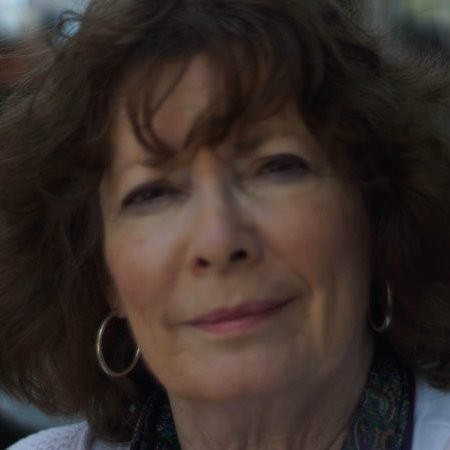
Born in Brooklyn to an Irish mom and Scottish father, she spent most of her childhood and three decades of her adult years in Syracuse, where she attended LeMoyne College and later earned her PhD in English from Syracuse University.
While at LeMoyne, her theology teacher was the anti-war priest, Daniel Berrigan, whom she credited with inspiring her social conscience. Her senior year of college, she entered a Mademoiselle magazine writing contest, and was chosen to be the Guest Editor-in-Chief for their 1964 College Issue, which took her to New York and London as well as to the UN, where she interviewed then-ambassador Adlai Stevenson.
She was in many ways ahead of her time. She earned her PhD in the early 70s while raising two small children, and she had to convince an all-male dissertation committee to approve her treatise on gender stereotypes in the English novel. She created the first Women’s Studies course at Syracuse before landing a full-time teaching job at a new State University of New York campus in Utica, NY. After learning she was paid significantly less than her male peers, despite being a single mother at the time (the assumption at the time was that women should be paid less as they were secondary income earners), she filed a Human Rights Complaint with the State of New York, and ultimately became the first successful litigant against SUNY for gender discrimination.
She left SUNY to co-found the Women’s Writer’s Center, a national nonprofit based out of Cazenovia College, and brought dozens of the most prominent poets, novelists, and essayists of the 1970s and 80s to the quiet lakeside town to teach, including Kate Millet, Marge Piercy, Adrienne Rich, Audre Lorde, Maxine Kumin, Muriel Rukeyser, Rita Mae Brown, Rhoda Lerman, and many others.
When funding dwindled for the Writers Center, she became a speechwriter for political candidates, and spent several years in a full-time role with the Mayor of Syracuse, Tom Young. At 50, she left Syracuse for Seattle to start a new chapter with a national education reform nonprofit, The National Faculty, a role that took her to Alaska and Hawaii and throughout the Pacific Northwest leading training institutes that helped teachers stay up to date on changing technology and science. The job uprooted her again to the New Orleans office, her favorite city, and eventually to Little Rock, where she ran the Honors Program at Philander Smith, an Historically Black College. At Philander, she helped create courses in film and filmmaking so that the students could take advantage of the latest technology that was democratizing media.
After retiring in her 60s, she became her own student and taught herself film editing and camera techniques and produced several films, including a documentary about Haiti, a scripted film about King Henry VIII, and a documentary about the Women’s Writers Center, Writing the Second Wave.
Those who knew Mary Beth describe her as a passionate educator with a wry and often irreverent wit who loved the craft of writing and storytelling, whether it be in verse, novels, journalism, or films. She also loved artists, Irish history, Democratic politics, golf (thanks to her Scottish father), horses (thanks to the book The Black Stallion), and ballroom dancing (thanks to all those Fred Astaire and Gene Kelly movies).
She is survived by her son Geoffrey of Cohasset, MA, his wife Nicole, their daughters Kali and Joy, her daughter Melissa of Los Angeles, and dozens of boxes of books, manuscripts, screenplays, journals, and blue books that will keep her stories, her students, and her memory alive.
Show your support
Add a Memory
Share Obituary
Get Reminders
Services
SHARE OBITUARYSHARE
- GET REMINDERS
v.1.18.0