
OBITUARY
Roderic Henry Phibbs
November 3, 1930 – August 21, 2024
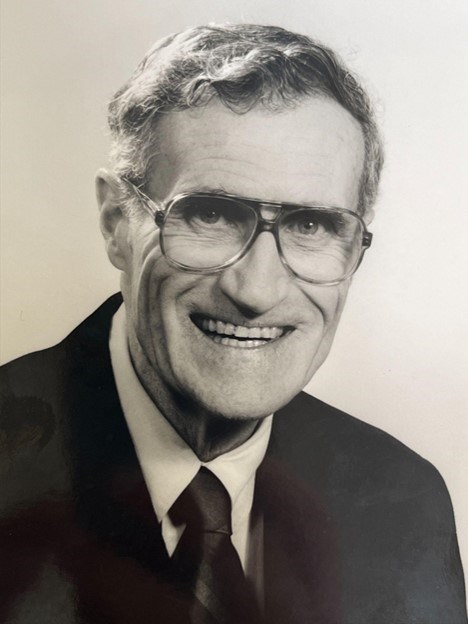
Roderic “Rod” Phibbs was born to Harry C. Phibbs, a pioneer in medical advertising and Mary F. Phibbs in Winnetka, Illinois. He was a gifted artist and passionate outdoorsman, traits that mirrored his father's interests. During his formative years, Rod and his lifelong friend, Tom Peacock had many great wilderness adventures, including hiking and canoeing expeditions in the Midwest and Canada. Those years cemented a deep love of the outdoors which fostered a lifelong love for hiking, camping, skiing, sailing and gardening which punctuated the family vacations and travels around the world. Those who knew Rod, knew his artistic talents were more than a hobby. In 1948 he enrolled in The University of New Mexico to study Fine Arts. As the story goes, his cardiologist older brother Brendan encouraged him to cultivate a career that could generate an income and so, after 2 years in New Mexico, he transferred to the University of Syracuse to study biology. That advice could not have been more valuable because shortly after his arrival, he met the love of his life, Jane Sargent. Additionally, it set him on a career path in medicine that truly became his calling. Rod and Jane married shortly after they met; when asked why they got married so young Rod replied, "Have you met my wife Jane - why wouldn't I have married her!!" The two had so many common threads that tied them together including their artistic talents, love of nature, gardening and appetite for gourmet food and wine. Oh, and those gin martinis!
They remained in Syracuse while Rod attended medical school and started a family with Ciaran born in 1957. In 1958, they moved to San Francisco for Rod's residency and the beginning of what became a lifelong career at UCSF. During those early years they lived in university housing, a place they affectionately referred to as "pregnant acres" for obvious reasons, and there they met lifelong friends George and Anne Gregory. This friendship also blossomed into an incredible professional collaboration with George that set the stage for their contributions in the nascent field of neonatology. The two couples’ friendship included co-owning a vacation home on Tomales Bay, sharing ski rentals in the winter in Tahoe for their collective brood of 7, and co-owning many sailboats together including the amazing "Animal Farm". When Rod and Jane’s second son Christopher was born prematurely in 1960 and developed RDS, Dr. William Tooley's care was instrumental in his survival. For Rod, this was a career changing moment which turned his focus to neonatology.
In 1962, their son Rann was born and the family uprooted for 2 years to London, Ontario where Rod did postgraduate work towards a PhD in biophysics at the University of Western Ontario. In keeping with their sense of adventure, the family set off traveling cross country, car camping along the way in their VW van, with stops in Casper WY to visit his beloved brother Brendan and many outback excursions in Eastern Canada. Upon his return to California, he joined the faculty of pediatrics at UCSF and the family bought a home in Mill Valley, where son Peter was born in 1965.
In 1965, Rod and Bill Tooley were the only attendings in the NICU, but the team grew over time. In collaboration with Dr. John Clements, Dr George Gregory, Dr. Joseph Kitterman and the colleagues at the CVRI, Rod and this team worked tirelessly and innovatively to solve the mystery of RDS in "preemies." They implemented many interventions and treatments that truly radicalized care and improved infant survival. This team of mavericks at UCSF conceptualized and designed methods for monitoring infants with dedicated equipment that was not yet available for neonates. These curious minds were true pioneers of what is today, the thriving specialty of neonatology and Rod enjoyed every moment of tapping into his creativity to help collaborate and advance this science. Rod was extremely proud of his colleagues and always touted the successes of their work that propelled neonatology forward. Rod was often humble about his role in neonatology, preferring to extoll accomplishments such as Dr Clements' discovery of surfactant ("He should have won the Nobel Prize!"), Dr. Gregory's invention of neonatal CPAP ("Do you know what this discovery did?") and the impact these advances brought to their work. He truly was thrilled to be working with all of these GIANTS. His medical career, garnered for him, the ultimate professional satisfaction. He loved his work, he loved to teach, and he loved to talk about all that this group accomplished to help children throughout the world. Rod relished the teamwork and experimentation that saw infant survival from RDS change from a rare occurrence to frequent successes with very good long-term outcomes.
He became the Chief of Neonatology from 1972-1992 and started the UCSF neonatology fellowship training program. He was particularly proud of all the outreach work that his team accomplished; both educating medical teams at smaller community hospitals and participating in the timely identification of patients that were in need of transfer to UCSF for a higher level of care. In the late 70's he invited his son Ciaran to study the costs of neonatal intensive care for his undergraduate honors thesis in economics, which would lead to the seminal paper on the cost of NICU care. Rod and Ciaran eventually published 7 papers together, including in JAMA and NEJM. In an odd twist of fate, Rod got to witness first-hand the benefits of his life's work when his granddaughter Briana (Ciaran's daughter) was born at UCSF at 26 weeks gestation. Born in an earlier time, Bri would not have survived, but because of all the advances in neonatology at UCSF, she survived and now has her master’s in engineering! The personal impact of Rod's work was not lost on him and Rod frequently recounted stories of this event with a great sense of gratitude and awe.
Outside of work, Rod was a busy man. He never left home without a sketchbook and pen in his pocket; he constantly observed his surroundings and "took note!" Whether at dinner at a cafe or on a hike, he documented the extraordinary things that he observed. Christophe’s cafe in Sausalito memorialized his work by hanging his paper tablecloth sketches in the kitchen as a tribute. He was a prolific painter of landscapes, seascapes, towns and characters that he captured along his travels. Many of you have received the annual holiday card over the years, reproduced from one of Rod's black ink sketches. He had a playful creativity such as when his granddaughter Meagan was going to Spain, he painted a Toreador, made a slit in the paper in the cape, and folded a $100 bill through the opening as a gift. He was also a competitive sailor, a sport that he loved to share with his sons. The family raced the Wylie 28 Animal Farm for many years, including winning 4 MORA season championships. If you got Rod talking about sailing, the tales of Animal Farm were legendary! Never one to shy away from adventure, Rod even completed a TransPac and a Newport to Cabo race. Whether he was hiking with one of his beloved golden retrievers, gardening, grafting his pear trees, sailing, sketching, painting, teaching, or practicing medicine, it can certainly be said that he was a true Renaissance man with diverse talents and interests. He shared 71 years with his beloved Jane and created a life that is impressive for a boy, who at the age of 7, lost his mother. He demonstrated an incredible resiliency to thrive and contribute to his community and the world around him. He leaves behind a mark that is indisputable and lasting.
Rod is survived by his sons Ciaran (Jill), Chris (Renee), Rann and Peter and his grandchildren Meagan (Mike), Shannon, Briana, Claire, Savannah, and Jack and his great grandchildren Ella Jane and Poppy and his dog "T".
A celebration of his life will be held on Saturday, April 19th, 11:30-2:30 at the Tiburon Yacht Club, 400 Trinidad Drive, Tiburon.
Show your support
Send a Gift
Add a Memory
Share Obituary
Get Reminders
Past Services
Celebration of Life
- Send Sympathy GiftsSEND
GIFTS SHARE OBITUARYSHARE
- GET REMINDERS
v.1.18.1