
OBITUARY
Helga Schramma
July 19, 1930 – July 16, 2026
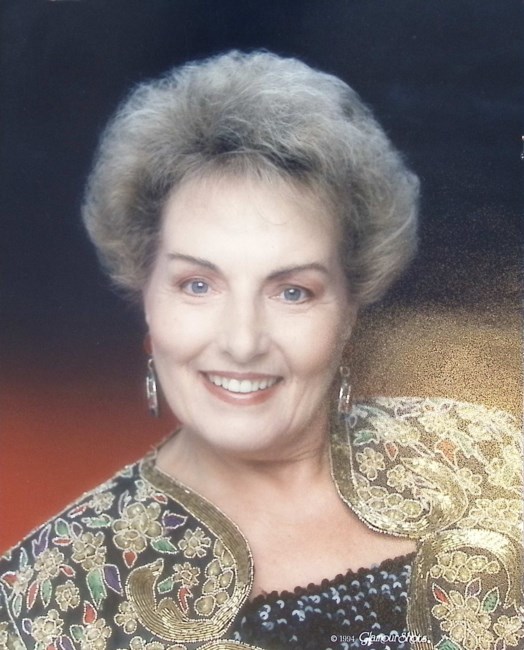
Helga was born July 19, 1930, to Friedrich and Ida (Tubies) Ulonska near Johannisberg, East Prussia, the younger sister of Heinz. She grew up on the family farm, until war tore the family, farm, and country apart. Through the war Helga and her mother stayed running the farm. In 1944, with the threat of Soviet invasion echoing in the gunshots heard on their farm, Helga and her mother were sent to safety in Sudetenland, Czechoslovakia, working for a family connection. Unfortunately, shortly after their arrival, the war ended, anti-German sentiment was high, and government decrees made it so Helga was made to work as an agricultural laborer in potato and hops fields. Eventually, almost all ethnic Germans were expelled from Czechoslovakia — among the largest forced migrations of the twentieth century. Helga and her mother made their way as part of this wave to West Germany, and were reunited with her father and brother. Despite remarkable odds and hardship, they survived and could start again.
Helga married Erwin Schramma in 1952. They welcomed Petra in November 1956, and the family immigrated to the US when she was six weeks old. Helga was eager for a new life outside Germany, and worked hard at her job, at learning the new language, and at building a life and legacy to give her children something better. A son, Edgar, arrived in January 1958. Her parents followed them to the US soon after, and Helga and Erwin worked tirelessly to build a life for their family.
Helga's presence was most defined by her ceaseless energy — energy spent on her Church and cultural communities, on friends, and on feeding her family. Helga showed her love most enthusiastically through food, working for days before any holiday to be sure everyone's favorites were on the table when company came. She was, in every sense, a devoted homemaker: her house was kept immaculately clean; its windows dressed and decorated; its shelves full of kitschy figurines, painted plates, and lace. The kitchen window held every piece of stained glass her grandchildren had ever given her, a small stained-glass archive of the family passing through. The family often had a dog underfoot, and Helga loved all of them dearly. She was incredibly proud of her family and the life she had built for them.
She loved to shop, her eyes peeled for the best deals, triumphant whenever she saved a bundle of money on fabulous clothes. Ever economical, she saved every empty yogurt tub, scoured the newspaper for sales, and became a devoted Aldi shopper the moment one opened nearby.
Amidst all the care she lavished on others, she also took good care of herself and her appearance. She tanned as often as she could, doused her face daily in lotions and creams, wore a perfume so distinctive that her hugs stayed with you long after, and kept her hair dyed and styled well into old age, so that her looks — like her energy — projected someone decades younger. She also found a lot of pleasure in traveling, and her wanderlust took her far beyond Connecticut. She traveled regularly to Punta Cana with her girlfriends; visited Germany, Russia, Australia, French Polynesia; and treated her family to cruises in the Caribbean and Alaska’s Inside Passage. Every birthday, she would settle in by the phone, waiting for calls to come in from family scattered around the world.
Though she had chosen to leave her country, Helga never abandoned her culture. She was an active member of the Hartford Liederkranz and Sängerbund clubs, her fluty voice a fixture in their concerts, her presence guaranteed at every event. She took great joy in spending time with her friends from these groups, and her greeting them invariably sparked smiles and appreciation for the cheerful small German lady who was coming to give you a hug and talk your ear off. Her faith was equally steady — she remained devoted to St. James Episcopal Church, the congregation that had sponsored the family's arrival in America, for the rest of her life. The fusion of culture she embodied was best represented at the Thanksgiving table – Rotkohl and Spätzle next to turkey and mashed potatoes, all made with equal love.
Her chipper vigor lasted throughout her life — even into her 90s, she would sing at the senior center, bringing music to those less mobile yet decades younger than her. Even as dementia stripped away her physical and mental capacity, she continued cheerfully chatting and singing to those around her until the end. Through it all, she marveled at how lucky she was to have the life she did, overcoming such a tumultuous childhood and being able to create a life of comfort and stability.
We will miss the spunky, incredibly caring person Helga was. Our Streuselkuchen will never taste quite the same as hers, her style will never again be matched, and no one will ever make us feel as loved and appreciated as she did.
Helga is preceded in death by her parents, brother Heinz, husband Erwin, and son-in-law Joseph Jenkinson. She is survived by daughter Petra Jenkinson; son Edgar; grandchildren Erica and Kelsey Schramma, and Patrick and Stefanie (Nathan) Jenkinson.
Funeral service will be held on Thursday July 30 at 11:00 at St. James Episcopal Church followed by a lunchtime celebration at a nearby restaurant. Please help celebrate her love and energy by wearing your happy and energetic bright colors, and your best sparkly bling.
St. James Episcopal Church, 3 Mountain Rd, Farmington, CT.
In lieu of flowers, memorial donations can be made to: The Hartford Sängerbund, 719 North Mountain Road, Newington, Connecticut 06111. Telephone 860.953.8967
Show your support
Add a Memory
Share Obituary
Get Reminders
Services
SHARE OBITUARYSHARE
- GET REMINDERS
v.1.18.0