
OBITUARY
Jeremy David Dunning
February 15, 1951 – October 7, 2026
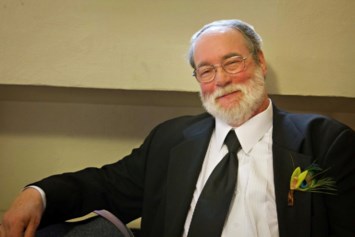
With deep sorrow, we announce the passing of Dr. Jeremy David Dunning, who left us on October 7, 2026 at the age of 75, following a very short and difficult battle with liver and pancreatic cancer. He passed away peacefully while in hospice care, surrounded by his family.
Born in Washington, D.C. on February 15, 1951, Jeremy was the son of John Dunning Sr. and Jaqueline (Creamer) Dunning. Raised in Princeton, New Jersey, Jeremy later resided in Bloomington, Indiana, and retired to Saint Augustine, Florida. He leaves behind a remarkable legacy that seamlessly bridged the worlds of cutting-edge earth science, extraterrestrial aerospace research, higher education administration, and pioneering digital learning technologies. He was a widely acclaimed geologist, a visionary entrepreneur, and a cherished family man whose warmth and devotion matched his vast intellect.
Family and Remembrance
Above all his academic and professional accolades, Jeremy’s greatest joy was his family. Remaining close to his children and actively involved in their lives was always among Jeremy’s deepest priorities. He took particular pride in coaching their sports teams, especially football. An accomplished high school placekicker himself, he continued to share his knowledge and encouragement with promising hometown kickers long after his own children had graduated.
Jeremy is survived by his devoted wife of 54 years, Deborah Dunning, his three loving children, Katherine Dunning (Daniel Deforrest), Nicholas Dunning (Lyndsey), and Abigail Panfil (Jeffrey); his two precious grandsons, Finn and Ford Panfil; and his sister, Jennifer Dunning. He was predeceased by his parents, John and Jaqueline Dunning, his brother, John Dunning Jr., and his nephew, Timothy Dunning.
His family will remember him not only as a global innovator but as a pillar of unwavering support, humor, and guidance.
Academic and Scientific Beginnings
Jeremy’s lifelong pursuit of scientific inquiry began with his undergraduate education at Colgate University (BA, 1973), followed by an MS from Rutgers University (1975), and a Ph.D. from the University of North Carolina (1978).
Soon after earning his doctorate, he joined the faculty at Indiana University Bloomington (IU). Over a multi-decade academic career he established himself as a highly accomplished educator of Geophysics and Structural Geology, publishing more than 120 papers, three books, eight CD-ROM textbooks, and securing numerous highly competitive research grants from institutions like the National Science Foundation (NSF) and the USGS. At IU, he also served as Associate Dean of Research and Graduate Development and directed an innovative program connecting small businesses with federal research opportunities, before serving as Dean of Continuing Studies and later receiving the title of Dean Emeritus.
Recognition with NASA
During the late 1970s and early 1980s, Jeremy’s work caught the attention of NASA, drawing him into space manufacturing research. He famously co-authored pioneering research detailing the electrophoretic separation of lunar soil - laying the mathematical and physical groundwork for processing raw mineral assets on the Moon to construct automated space facilities. His work with space-materials and his role with the Universities Space Research Association (USRA) earned him substantial recognition and high-level honors across the space science community, including the prestigious “NASA Ames Honor Award”.
A Technological Visionary and Entrepreneur
Jeremy was an early adopter of technology in the classroom, anticipating the digital education revolution decades before it became mainstream. He co-authored In Terra Active, the world's first interactive multimedia textbook in the geosciences.
To broaden the horizons of digital learning, he stepped into entrepreneurship as the founder of “Arjuna Learning Designs”. Through Arjuna, he spearheaded the development of the TALON Learning Object System—a suite of open, repurposable interactive templates that empowered everyday instructors without coding knowledge to design elegant, effective online coursework.
His exceptional contributions to instructional design earned him some of the highest accolades in the field:
- The “Alfred Sloan Foundation Learning Effectiveness Award” (2003) via the Sloan Consortium
- The “Ernest Boyer Award” (2006), a highly prestigious global honor celebrating creative men and women who significantly advance technology and learning in higher education
- The “IU Board of Trustees Teaching Excellence Award” (2007)
- The “ACHE Novel Use of Technology Award” (2004)
- The “ICI Gold Medal” (2003)
Legacy
Jeremy will be remembered by his family, fellow peers, thousands of former students, and the scientific community as a true polymath - a man who looked at a computer screen and saw a gateway to smarter, more immersive, results-driven education.
A private memorial will celebrate his life and legacy. In his honor, the family asks that you look upon the world with the same boundless curiosity he possessed, and carry forward his enduring commitment to passion, mentorship, discovery, and enriching both the minds and spirits of all who knew him.
Show your support
Add a Memory
Share Obituary
Get Reminders
Services
SHARE OBITUARYSHARE
- GET REMINDERS
v.1.18.1