
OBITUARY
Dennis Michael Durand
September 10, 1946 – May 30, 2025
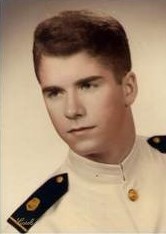
It’s with a heavy but grateful heart that we share the story of Dennis Durand—a man whose life was marked by ambition, curiosity, and a profound sense of possibility. Dennis passed away recently at home in Palm Coast, Florida, in the care of hospice, with his wife, Karen, by his side and the music he loved playing in the background. He lived well into his 78th year—about a decade longer than his own father—a testament to his stubborn determination and the incredible care he received from Johns Hopkins, Mayo Jacksonville, Advent Health, and finally Advent Health hospice.
Dennis was born on September 10, 1946. He was raised in Massapequa, Long Island, the son of William (Bill) Durand, (a postal worker who played his saxophone in the Army Band during WWll) and Marge (Margaret Bartow) Durand. From these humble beginnings, he charted a path that embodied the American postwar spirit: anything was possible with enough effort and know-how. After attending St. John’s Prep School in Brooklyn for two years, he graduated from Plainedge High School in 1964 and went on to the New York State Maritime College at Fort Schuyler (1968). There, he earned a degree in engineering and was commissioned as an ensign in the Naval Reserve from which he would eventually retire at the rank of lieutenant in 1977. He spent five years at sea as an engineering officer aboard Exxon and Mobil tankers—a chapter of his life that fostered his love of travel and left him with stories about crossing oceans that he would share decades later.
Returning to land, Dennis continued to build on that early education, earning an MBA in finance from Long Island University and a master’s degree in nuclear engineering from NYU Poly. He became a licensed professional engineer, a licensed CFP and a senior reactor operator with the Nuclear Regulatory Commission, devoting much of his career to the Long Island Lighting Company (LILCO). He was deeply proud of his work on the Shoreham nuclear power plant—a project that represented for him the promise of clean, efficient energy and the boundless potential of American engineering. In addition, He owned his own franchise as a home inspector on Long Island with National Property Inspections. His expertise in so many disciplines made him an excellent entrepreneur.
But for all his professional accomplishments, Dennis was even more proud of the life he built with his wife, Karen, his high school sweetheart. They married in 1969 after both completing their college degrees, and together they raised their sons, Brett and Dan, in Shoreham on Long Island, New York. Brett became an attorney in San Diego, while Dan followed a medical path in Baltimore, where he now lives with his wife, Ashton, a nurse, and three children, Connor, Evan, and Colette.
To understand Dennis, you have to understand that he was a man of high expectations. He set the bar high not out of a desire for status or wealth, but because he genuinely believed in the power of knowledge and hard work to improve the world. In his later years, he would ask questions like, “How is it possible that no one has figured out a blood test for cancer? How hard can that be?”—a question that might seem naive until you consider that he faced cancer himself at least four times and survived each battle through early detection and sheer force of will. His secret weapon? Doing what his family encouraged him to do—getting screened, staying vigilant, and never giving up.
Thoughts from Dan and Brett
Growing up, those high standards could be tough. But they came from a place of deep care and conviction. Dad was a man of big ideas and bigger hopes. As kids, we remember him talking about how nuclear power could save the planet, how the local school board should be doing things differently, and how hard we would need to work in order to earn our place in an increasingly competitive world. He was always engaged, always thinking, always believing that the world—and the people in it—could be better.
When we were young, he coached our baseball and soccer teams, bringing his exacting standards to bear on a generation of Brookhaven Town baseball players in the late 1980s and early 1990s. Those years were among the most challenging and rewarding of our childhood. Under his coaching, we made the playoffs every year and even won the pennant once—something that had never been done before in Shoreham. If you were one of those players, you know how demanding he could be—and how much he believed in us. He also coached us in tennis. This meant spending countless hours transporting Brett to tennis lessons and coaching both of us to become better tennis players. Looking back, we wouldn’t trade those years for anything.
As Dad grew older, he became even more focused on issues of social justice and fairness. He was ever-evolving: a man who could see the world as it was, but also as it might be. In his 70s, he often sounded like a rebellious teenager—still demanding more from society and still believing in the power of engineering and effort to make it happen.
The 1990s were hard years for him, though. The Shoreham nuclear plant closed amid political and public pressure, and Dad was reassigned to Nassau County. This meant daily 2–3-hour commutes on the LIE, which took him away from coaching and from us. As teenagers, we didn’t fully understand the toll it took. Now, as grown men with demanding jobs and households of our own, we see how much that must have hurt him. But he never complained. He got up before dawn, drank enough coffee to fuel a small army, and drove that battered Toyota Corolla home every night, willing to do whatever it took to complete what he saw as his part of the bargain, even though New York State had decided it didn’t want a nuclear power plant after all.
But a brilliant and rewarding season followed over the final chapters of his life. In 1999, at age 52, Dad retired from LILCO. A few years later, he and mom retired to Florida. From then on, he lived the life he had always dreamed of: one where he was free to do what he loved. He played tennis and golf well into his 70s, rode his bike along the trails of Palm Coast, rode his motorcycle and traveled the world with mom—by land, sea, and air. They went back to Europe to revisit the ports he had seen as a young sailor, spent every summer in Cancún since 1990, and explored America’s national parks.
He reconnected with old friends, made new ones in Florida, and most of all, devoted himself to his family. His final years were filled with the joy spending time with his both of us as well as his brothers, sisters-in law, brothers-in law, and most of all watching his grandchildren grow and sharing with them his passions—whether it was judo, classic rock, or whatever unusual clip about nature or the military that he’d found on YouTube.
Dad’s life was about possibility. He never let his humble beginnings define him. Instead, he forged a path that showed both of us—and everyone he touched—that it’s possible to start from modest roots and build something extraordinary through knowledge, determination, and a willingness to dream. He leaves behind our mother Karen Lockwood Durand, his wife of 56 years; both of us, his sons, Brett and Dan (Ashton Durand), his three grandchildren, Connor, Evan, and Colette; his brothers William (and Jo Ann), Joseph (and Margarite) sister-in-law Janet Moran (and John Moran) and his nieces and nephews; Scott Durand (Stephanie), Lane Durand (Corinne) Thomas Moran (Bridget) John Moran, Betsy Moran, Kami Wilson and Geoff Wilson (LaFaye).
We’ll miss him terribly. But we’re so grateful for the example he set—a reminder that no matter where you start, you can always imagine a better version of yourself and the world. And if you’re willing to work for it, you just might get there.
Thoughts from Karen
As everyone knows (who knew us well), we were together for most of our lives. We met when I was 14 and Dennis was 15. We literally grew up together, shared our lives through the child rearing years, enjoyed retirement and grew old together. He was my best friend, my soulmate, the love of my life and he will be with me always. We were a team throughout our lives; sharing the same goals and working towards attaining them…together. His family was his life and it is impossible to imagine my life without him.
The song we danced to at our wedding 56 years ago explains my feelings well.
The Twelfth of Never
by Johnny Mathis
You ask how much I need you, must I explain?
I need you, oh, my darling, like roses need rain
You ask how long I'll love you; I'll tell you true:
Until the twelfth of never, I'll still be loving you
Hold me close, never let me go
Hold me close, melt my heart like April snow
I'll love you till the bluebells forget to bloom;
I'll love you till the clover has lost its perfume
I'll love you till the poets run out of rhyme
Until the twelfth of never and that's a long, long time
Until the twelfth of never and that's a long, long time
Show your support
Add a Memory
Share Obituary
Get Reminders
SHARE OBITUARYSHARE
- GET REMINDERS
v.1.18.0