
OBITUARY
Lester Laverne Metz
March 26, 1929 – October 30, 2026
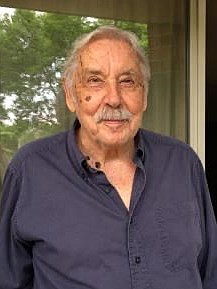
Les grew up on a farm in southern Illinois, the youngest of six. He attended a one-room schoolhouse, and lived a childhood in which money was scarce but apparently not much missed. As he liked to say, until someone told him he was, he never knew he was poor.
It was perhaps an early indication of how he would approach the next 97 years: interested less in what things cost than in what made them worthwhile.
He went on to earn a bachelor's degree from Northwestern University and a master's degree from the University of Chicago. He also served in the United States Army 82nd Airborne Division, though military service was never something he particularly identified with. His interests and identity were shaped far more by art, literature, design, and an enduring curiosity about the world.
From 1963 to 1993, Les served as Director of Printing and Graphic Arts at the University of Minnesota, where his creative sensibilities and technical abilities found a natural home. Typography and letterpress printing were enduring passions, and retirement gave him ample time to pursue them in his own studio. He appreciated the beauty of a well-designed page, the feel of fine materials, and the deep satisfaction of work done well.
Les was remarkably resourceful and largely self-taught; he possessed an abiding confidence that most things could be figured out with enough patience, ingenuity, and effort. He built a house in Stillwater himself (many said it was impossible), with the help of family and friends, rather than relying on a builder. And when it came to buying houses, he had little use for real estate agents. If he saw a house he liked, he simply knocked on the door and struck up a conversation with the owner. Remarkably, this approach worked more often than one might imagine. He had a quiet way of making things happen, without fuss or fanfare.
He was unassuming, thoughtful, and patient. He listened before speaking and chose his words with care. His intelligence was considerable, his curiosity boundless, and his manner without pretense. He valued his own privacy and respected that of others. He rarely spoke unkindly of anyone and was slow to pass judgment, yet he held strong convictions about fairness, human rights, and the dignity of others. Independent in his thinking and deeply concerned with the wider world, he welcomed lively political discussions and the exchange of ideas.
His generosity was often expressed in the simplest and most meaningful way: he could be counted on. And many people did.
Les and his wife, JoAnne, shared 45 years of marriage before her death in 2002. Theirs was a relationship of uncommon bonds, shared history, and enduring commitment—a partnership that weathered life's complexities and remained an important part of who he was.
As a father, grandfather, and great-grandfather, Les expressed his love less through declarations than through a steady, unmistakable interest in the people he loved. He paid attention. He listened. He cared about who you were, what you thought, and what mattered to you. His affection was found in his eyes, in his actions, and in the quiet reassurance that he was always there.
He also had a wonderful sense of play, particularly when children were involved. His extensive collection of wind-up toys was just one expression of a lively imagination that produced magic shows, handmade puppet theaters, and occasional appearances in the living room or kitchen of the King of England, the Reluctant Dragon, or other fanciful character. He delighted in creating moments of wonder and surprise, giving children the rare gift of an adult willing to enter fully into their imaginative world.
Lake Superior held a special place in his life. Summer after summer, with his children and later with his grandchildren, he returned to its shores. He loved the lake's vastness, its ever-changing moods, and the quiet pleasure of combing the beaches for rocks and agates. He passed that enthusiasm along to the next generations, who invariably returned home with collections of stones and memories. In the evenings, he would build a fire along the shore and, beneath the night sky, admire the stars and constellations. It was a place where his love of nature, family, and the mysteries of the universe came together.
Les was an insatiable reader, with a particular appreciation for poetry, and over the years wrote a collection of poems of his own. He was an enthusiastic participant in conversations that wandered through literature, philosophy, science, politics, and the mysteries of existence. Music was another constant pleasure, from classical compositions to jazz, folk, the Beatles, and beyond. He loved lingering meals shared with family and friends, good conversation, and the pleasure of exchanging ideas.
He was never entirely certain what, if anything, awaited him after death. He was open to the possibilities, though not especially inclined toward definitive answers. He did, however, have one practical request: to be buried in his pajamas, with a good book, so that wherever he ended up, he'd have something to read.
One of his final outings, just days before his death, was to his book club. It seems a fitting last chapter for a man who spent 97 years reading, learning, creating, and questioning, and who never lost his interest in what others had to say.
Les is lovingly remembered by his four children, Kristin (Rob), Ann (Bruce), Erin (Paul), and John; his grandchildren, Max (Lauren), Emma (Noel), Jacob, and Nathan (Nicole), and his great-grandchildren, Riley and Beckham. To all of them, he gave not only his love, but also his curiosity, imagination, and sense of wonder.
In lieu of a formal service, Les would have liked to be remembered in the simple pleasures he valued most: during a leisurely walk in nature, along the shores of Lake Superior, in the pages of an interesting book, or perhaps over a glass of bourbon shared with someone whose company you enjoy.
Sleep well.
Show your support
Send a Gift
Add a Memory
Share Obituary
Get Reminders
Services
- Send Sympathy GiftsSEND
GIFTS SHARE OBITUARYSHARE
- GET REMINDERS
v.1.18.1