
OBITUARY
Calvin John Morgan
May 30, 1933 – April 20, 2026
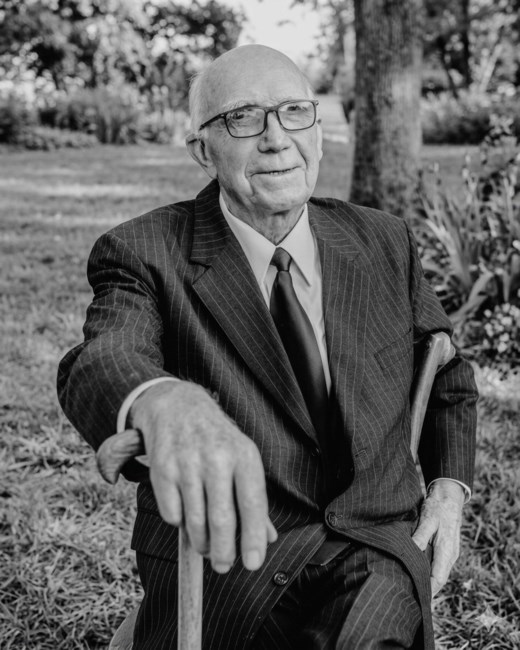
Calvin John Morgan died with grace and dignity one month shy of his 93rd birthday, with his loving wife and children at his bedside in his home overlooking the Blanco River in Wimberley, Texas.
He is survived by his wife of thirty-seven years, Elizabeth Anne Morgan; his children, Matthew Morgan (Melanie), Amanda Morgan McAllister (Shawn “Cal”) and her mother, Julia Findley, Richard Elwood (Keely), and Allie Elwood Hippard (George); grandchildren, Emma Morgan Melody (John), Rhys “Evan” Morgan, Louisa Morgan, Paige McAllister, Annie McAllister, Shelton Elwood DeLeonardis (Robert), Parker Elwood and Clint Hamilton; great-grandsons, Hudson Melody, Charles “Charlie” Melody and Woods DeLeonardis; and nieces and nephew, Christine Morgan, Jacqueline Morgan Paxman, Annette Morgan and Stephen Morgan.
Calvin was preceded in death by his parents, Harry and Evelyn Morgan; his former wife and mother of Matthew, Margaret Ward Morgan; and his brother, Harry “Evan” Morgan.
Born in the ancient Cotswold wool town of Tetbury, Gloucestershire, England near the Welsh border in 1933, Calvin grew up in the neighboring village of Culkerton. He adored and immensely missed his brother and “hero”, Evan, eight years to-the-day his elder and an RAF aviator, when he shipped off to Calcutta, India to fly missions over Burma. Still a young boy, Calvin spent the wartime years roaming the countryside around his house located near the end of the runway at RAF Kemble and watching aerial dogfights, while German bombs fell on the nearby airfield.
He was educated at Tetbury Grammar School, where he finished his required education at age fifteen but remained for additional study until he turned sixteen, the minimum age for leaving school. He was the only goalkeeper for the small school football team, which regularly competed against much larger schools, so “survival was paramount”, and those years resulted in what Calvin said became one of his earliest life lessons: “if I could survive that experience, I could survive anything.” After graduating, he worked for his father as an apprentice on various construction projects, which kindled his lifelong interest in building, while playing for the Tetbury Colts, the local amateur football club. He subsequently worked for the Town of Cirencester.
Post-war, his newly married brother had successfully sought employment from C.E. King, a successful Houston, Texas-based real estate developer about whom he’d read. Calvin wrote to his brother, insisting on joining him in Houston; soon after, Calvin received a letter from King guaranteeing employment and allowing him to obtain a visa. On Boxing Day 1951, Calvin sailed to New York aboard the Queen Mary with his very Welsh sister-in-law and young niece, but only after the former demanded he take dancing lessons for the voyage! After a 56-hour train journey to Houston, Calvin was at work the next morning as a land surveyor for C.E. King, whose generosity and mentorship formed one of the most important relationships of his life. It was King who shortly thereafter asked Calvin what he planned to do about college and told him he “could get his @%$ back on the boat to England” if he wasn’t enrolled at the University of Houston by the start of the next semester.
Calvin began classes at 7 AM every morning and worked each afternoon surveying for C.E. King. While at UH, he was contacted by the draft board, but he was not yet a U.S. citizen or old enough to be drafted, so he joined the ROTC to ensure he would be eligible to take his army commission upon graduation.
Before finishing college, however, Calvin suffered a major setback, contracting polio in 1954 and spending months in and out of a Hubbard tank to ease the nearly intolerable pain that would remain in his memory, result in permanent muscle loss and impact his health and mobility for the remaining 72 years of his life. Incredibly, however, he was able to walk upright using only a cane until just days prior to his death.
After graduating in 1956, and while working as a young civil engineer for Robert Atkinson & Associates in Houston, Calvin met his first wife, Margaret, also English and a licensed British nanny and nurse then working with terminally ill children at Texas Children’s Hospital. She had been diagnosed with breast cancer prior to their marriage in 1958; he married her without hesitation and she died in 1964, leaving Calvin as a single parent to his 2-1/2-year-old son, Matthew. As tragic as this loss was, ironically, both Calvin and Matthew agreed that the ensuing years spent together comprised some of the happiest days of their lives.
Calvin devoted every moment he wasn’t working to raising his son, effectively taking on the dual role of father and mother, before marrying Julia in 1970. They had a daughter, Amanda, and by then Calvin had started his own company, Calvin J. Morgan & Associates, focusing primarily on large public works and private land development projects. He had become a prominent designer of water and sewage treatment plants, roadways, residential and commercial subdivisions and multifamily projects; but he was always a land surveyor with a love for map-reading at heart, and on regular return visits to England, he spent days crisscrossing the English countryside on foot and by car, following his cherished collection of Ordnance Survey maps and imploring anyone along for the ride to learn to correctly read a map as well.
Calvin was a dedicated churchman. He served multiple terms on the vestry of Palmer Memorial Episcopal Church, both as a vestryman and warden, as Sunday School Superintendent, lay reader and self-appointed audio producer of the popular Sunday morning lecture series by his soon-to-be nationally recognized friend and popular psychologist, John Bradshaw. During his years in Wimberley, he was a parishioner at St. Stephen’s Episcopal Church.
During the 1970’s and early 1980’s, Calvin’s business flourished and grew into one of the largest and most successful civil engineering and land surveying firms in Houston. The firm was rebranded as Morgan-Rieniets, Inc. Calvin treated each of his employees as C.E. King had treated him – as a family member and with care, respect, support and generosity. He once hired a young debt-laden engineer, wrote him a sizable check, bought him a car and then said not to worry about paying him back. Many City, County and State political officials and staffers had the highest regard for him – and they regularly let this sentiment be known.
Calvin’s financial fortunes were severely tested when the Houston economy was devastated by the mid-80’s oil bust; but he was a survivor. He said he would do whatever it took to stay in business, “even if it meant ending up with just four walls and a telephone.” As a diligent future-proofer, Calvin had invested heavily in computing and automated design technology, and the business was burdened by debt. Calvin pledged to pay back every bank loan regardless of the consequences – and he did. He then succeeded in restructuring the business and merging it with Carter and Burgess of Fort Worth, where he continued his career as a principal after marrying his adoring and graceful wife, Anne, before ultimately retiring several years after that firm was acquired by Jacobs Engineering, Inc.
Even after retiring, however, Calvin would not stop working. He had been the civil design engineer on all his son’s multifamily development projects up to that point, and he continued this work until the outbreak of the global pandemic.
Calvin was a voracious reader. He wrote that he had been so privileged to have been taught by so many Oxford and Cambridge-educated faculty, that in all the years following, he “never encountered a subject that had not to some degree been touched upon in grammar school.” Considering this observation vis-à-vis the sheer number of books he digested in his lifetime attests to the size and scope of Calvin’s intellect. In this regard then, he was not only the consummate mentor and sounding wall for his children, but a sharp-witted and savvy intellectual sparring partner with, and purveyor of knowledge to, anyone with whom he came into contact. He had an almost clairvoyant ability to foresee problems and minimize their occurrence and a unique propensity to solve them when they did occur.
He was also a voracious tea-drinker. Few people were allowed to spend much time in Calvin’s household without not only being instructed on how to properly make tea but also being led to think that something was wrong with them if they left without liking it. He converted countless people into tea-lovers and travelled to the mountains with a pressure cooker in his gadget bag to ensure he could boil water to a full 212 degrees at high altitude.
The later years of Calvin’s life were also some of his best, spent in the house atop a bluff overlooking the Blanco River Valley, which he and Anne built and furnished with love and hospitality showered upon a never-ending stream of visitors comprising family, friends and former work colleagues hailing from near and far. Calvin was at his core a builder – of anything: model airplanes with his young son, an entire brick & stone patio and garden outside his first house, a full-sized playhouse for his young daughter - and when he wasn’t taking a break playing golf or reading at the Wimberley Library, he was outside busily covering almost every square yard of area surrounding the Wimberley house with limestone structures. Using knowledge he’d acquired from his father as boy to build dry-stacked Cotswold stone walls, he built walkways, steps, curbs, gutters, low walls, high walls, retaining walls, drainage swales, planters, pilasters, flower beds, patios, a driveway, an outdoor fireplace and chimney, a vegetable garden and a bocce ball court – each piece of limestone custom-fitted to the next. In the process, he achieved something that is nearly impossible to do in the Texas Hill Country: he ran out of limestone - so he sent Jesús down the hill on the tractor to bring back more. If ever mankind should elect to identify the eighth Wonder of the World, surely this Central Texas blufftop will be in the running.
Calvin had written, prominently in his diary, a pledge to “always honor, love and respect Anne” and these things he did until his last day, when he simply thanked her for everything she’d done to care for him. But this pledge also embodies how he treated each of us, each of you and anyone who knew him. Always more interested in what was going on in our lives than in his own, he eschewed conflict and built relationships of stone, too. What a treasure Heaven has now received. We will miss this kind, compassionate, generous soul and consummate English gentleman in this life, and we look ahead with great joy and anticipation to being reunited with him in the life of the world to come.
The family wishes to gratefully acknowledge the kindness and help provided so selflessly by the following: Jesús Flores Flores (said Calvin, “My life changed forever the day Jesus came into it!”); JR & Sharon Jones; Scott and Megan Archer, Shirley Miller and Melissa Wells of Senior Helpers; Scott & Colleen Ritter, Robin & Michelle of Bluebonnet Hospice; and the entire Circle of Friends at the Wimberley Senior Center.
A funeral liturgy will be offered in the chapel of St. Stephen’s Episcopal Church, 6000 Ranch to Market Road 3237, Wimberley, Texas at one o’clock in the afternoon on Saturday, May 23rd, the Rev. Kevin LJ Schubert presiding, followed by a reception at the Morgan home. A private inurnment will occur on a future date.
Donations in lieu of flowers may be made in Calvin’s memory to: St. Stephen’s Episcopal Church (www.ststeve.org); The Wimberley Senior Center (wimberleyseniors.com); or the March of Dimes (www.marchofdimes.org).
Show your support
Add a Memory
Share Obituary
Get Reminders
Services
SHARE OBITUARYSHARE
- GET REMINDERS
v.1.18.0